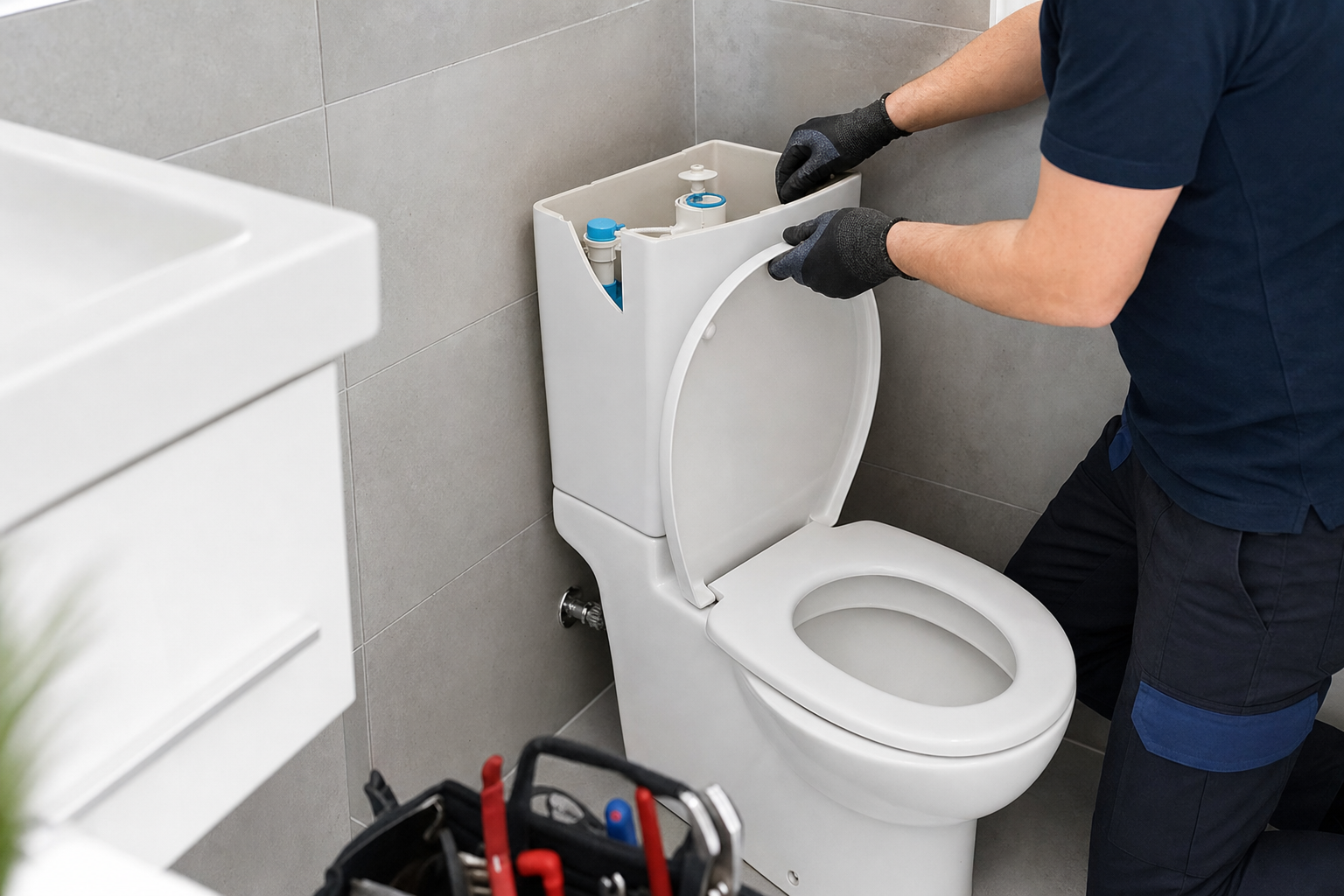
If you need toilet plumbing in Acton W3, the main priority is usually simple: stop the leak, restore flushing, and make the toilet safe to use again. Toilet faults can range from a slow cistern leak to a blocked pan, a broken flush mechanism, or a macerator that no longer clears waste properly. In shared homes, rented properties, shops and offices around Acton High Street, these problems can quickly become disruptive, unhygienic and costly if they are left to worsen.
Fast Response Plumbing & Heating provides local toilet plumbing support for homeowners, landlords, tenants and local businesses in Acton W3 and nearby areas such as Acton Central, Acton Town Station, The Vale and around Gunnersbury Park. The service covers leaking toilet repairs, toilet flush repairs and replacements, toilet installations and replacements, toilet cistern repairs and replacements, and macerator installations and replacements. If you are dealing with a toilet fault and need practical help, the best next step is to contact the team using 020 3292 0525 or the contact details on the website.
From a property point of view, toilet plumbing issues often show warning signs before they become an emergency. A toilet that keeps running, leaks at the base, smells damp, flushes weakly, gurgles, or needs repeated flushing is usually telling you something is wrong with the cistern, valve, seal, waste connection or the macerator system. The right repair depends on what is actually failing, so a proper diagnosis matters more than guessing and replacing parts at random.
For local properties in Acton W3, access can also affect how quickly a toilet fault can be dealt with. In flats, maisonettes, rented homes and commercial premises, plumbers may need clear access to the bathroom, the stop tap, the cistern, the waste pipe route, or the area around a boxed-in macerator. If the toilet is in a tight cloakroom, an upstairs bathroom, a basement room or a shared building, it helps to make the area accessible before the visit. That can reduce delays and make it easier to inspect the problem safely.
Customers often contact the business when the issue has moved beyond inconvenience and into a more urgent stage. Emergency signs include water pooling on the floor, a toilet that will not stop filling, sewage smells, repeated overflow, a blocked toilet that is affecting more than one fixture, or a macerator that is backing up waste. If waste water is escaping, the toilet should not be used until it has been checked. If the leak is near electrics, flooring, or a ceiling below, the risk to the property increases and the fault should be treated as urgent.
There is also a prevention side to toilet plumbing. Many callouts can be avoided or reduced in severity by watching for early symptoms, avoiding unsuitable items being flushed, and dealing with small drips or weak flushing before they become bigger repairs. Landlords and managing agents in Acton W3 also benefit from regular checks in tenanted properties, especially where toilets are used heavily or where a macerator system serves a bathroom that does not connect to a standard gravity waste line.
Below is a practical guide to the most common toilet plumbing problems, what they can mean, and how the service is approached in local homes and businesses.
Leaking Toilet Repairs in Acton W3
A leaking toilet can show up in several different ways. Water may appear at the base of the pan, around the cistern, from the supply pipe, or inside the toilet where it is not immediately visible. Some leaks are obvious because the floor is wet. Others are slower and only become noticeable when flooring starts to feel damp, a smell develops, or the toilet begins to move slightly when used.
In Acton W3 properties, leaking toilet repairs usually start with identifying the source. Common causes include a worn pan connector, a failed cistern-to-pan seal, damaged inlet valve parts, loose pipework, a cracked cistern component, or a fault with the flush mechanism that allows water to keep escaping. In some cases, what looks like a toilet leak is actually condensation or a nearby pipe issue, so a proper check is important before work begins.
Practical signs that a toilet may need repair include:
- Water collecting around the base after flushing
- A damp smell near the toilet or surrounding flooring
- Visible drips from the cistern, fill valve or pipe connections
- The toilet rocking slightly on the floor
- Water running into the pan when the toilet is not in use
For homeowners, the main concern is usually preventing damage to flooring, skirting and subfloor areas. For landlords, a small leak can become a tenant complaint, a maintenance issue, and potentially a wider repair if left too long. For local businesses, especially premises with customer toilets, a leak can affect hygiene and usability quickly. The aim is to identify the fault, repair the failed component where possible, and replace damaged parts when needed rather than leaving a temporary fix behind.
When preparing for a leaking toilet repair visit, it helps to clear access around the toilet and cistern, note when the leak happens, and avoid using the toilet if water is escaping onto the floor. If the leak is severe, turn off the local water supply to the toilet or the main stop tap if needed, then contact the plumber for next steps.
Toilet Flush Repairs and Replacements in Acton W3
Flush faults are one of the most common reasons people search for toilet plumbing Acton W3. A flush may become weak, incomplete, stuck, or intermittent. Sometimes the handle feels loose or does nothing. In other cases, the flush works but the cistern does not refill correctly afterwards, which can point to a fill valve, flush valve or internal mechanism problem.
Toilet flush repairs and replacements in Acton W3 depend on the type of system fitted. Some toilets use a lever handle, others a push button, and many modern cisterns have concealed or compact mechanisms. The fault may be a simple worn part, a build-up of limescale, a broken linkage, or a flush unit that has reached the point where replacement is the more sensible option.
Common flush-related symptoms include:
- Handle or button feels loose, stiff or unresponsive
- Flush is weak and leaves waste behind
- Cistern refills too slowly or too quickly
- Toilet keeps running after flushing
- Flush works only sometimes
In local homes and flats, a flush fault can be more than an inconvenience. Repeated flushing uses more water and can indicate a deeper issue inside the cistern. In rented accommodation, it may also lead to complaints if the toilet is difficult to use or noisy overnight. In commercial settings, a faulty flush can create hygiene problems and unnecessary downtime.
The usual approach is to inspect the flush assembly, check the cistern internals, test the refill operation and confirm whether the issue is with the handle, button, seal, valve or a connected part. If a replacement is required, the aim is to fit a compatible part that restores reliable operation. If the toilet is older or the mechanism is no longer economical to repair, replacement may be the better long-term option.
Customers can help by telling the plumber whether the flush has changed gradually or failed suddenly, whether it has been noisy, and whether the toilet is also leaking or blocking. Those details make diagnosis faster and more accurate.
Toilet Installations and Replacements in Acton W3
Toilet installations and replacements in Acton W3 are often needed when a toilet is cracked, outdated, repeatedly faulty, badly leaking, or no longer suitable for the bathroom layout. Some properties also need a replacement during refurbishment, after water damage, or when a more efficient or easier-to-maintain toilet is preferred.
A replacement may involve removing the old toilet, checking the soil connection and water supply, fitting the new unit, sealing and testing it, and making sure the flush and waste discharge work properly. In bathrooms with limited space, careful measurement and access planning matter. This is especially true in compact flats near Acton Central or in older properties where pipework and flooring may not be standard.
Signs that a toilet may need replacing rather than repairing include:
- Visible cracks in the pan or cistern
- Repeated leaks after previous repairs
- Outdated or hard-to-source parts
- Poor performance despite earlier fixes
- Damage from movement, age or wear
For landlords and managing agents, replacement work should be planned with tenant access in mind. The bathroom should be available, the water supply should be accessible, and any shared building rules should be considered before the visit. For businesses, it may be sensible to arrange the work outside peak hours so the toilet can return to use with minimal disruption.
When a toilet is being replaced, it is also a good time to check nearby pipework, the isolation valve, the flooring around the base, and the waste connection. That helps reduce the risk of fitting a new toilet onto an unresolved issue. If the existing toilet has caused repeated water ingress, the surrounding area should be inspected for signs of hidden damage.
Toilet Cistern Repairs and Replacements in Acton W3
The cistern is where many toilet problems begin. If the cistern does not fill properly, keeps running, overflows, or fails to release the right amount of water, the toilet will not perform as it should. Toilet cistern repairs and replacements in Acton W3 often involve the fill valve, flush valve, float, syphon, button mechanism, or internal seals.
Typical cistern problems include:
- Water constantly running into the pan
- Cistern taking too long to refill
- Noisy filling or banging pipework
- Weak flush caused by low cistern volume
- Water escaping from the cistern body or connections
Some cistern faults are straightforward repairs. Others are more suitable for replacement, especially if the cistern is cracked, badly worn, or no longer compatible with available parts. In concealed cisterns, access can be more involved, so the plumber may need to remove a panel or work through an inspection point. In older properties around The Vale or near Gunnersbury Park, the cistern may also be part of a more dated setup that needs careful handling.
Prevention matters here too. A cistern that starts making new noises, refilling more often than usual, or leaving the toilet weak after a flush should be checked early. Small internal faults can waste water and lead to larger failures later. If the toilet is in a busy household or a high-use commercial setting, early intervention can save time and reduce disruption.
Before the visit, it helps if customers can describe whether the problem is a leak, a flush issue, a refill issue or a noise issue. Photos can also help if the cistern is concealed or boxed in. Clear access to the cistern lid, isolation valve and surrounding area makes diagnosis easier.
Macerator Installations and Replacements in Acton W3
Macerator installations and replacements in Acton W3 are relevant where a toilet cannot connect directly to a standard gravity waste system, or where a bathroom layout requires pumped waste discharge. When working properly, a macerator allows a toilet to discharge waste through a suitable connected system. When it fails, it can cause noise, poor drainage, repeated blockages, odours, or waste backing up into the unit.
Common macerator faults include:
- Unit not switching on or not pumping effectively
- Repeated tripping or intermittent operation
- Unusual grinding or vibrating noises
- Waste backing up after flushing
- Persistent odours or poor drainage
Macerator problems need careful diagnosis because the issue may be electrical, mechanical, installation-related or caused by unsuitable usage. If the unit is repeatedly failing, replacement may be more practical than repeated repairs. In some properties, access to the macerator can be limited because it is boxed in, hidden behind a panel or installed in a tight bathroom area. It is helpful to provide clear access before the visit so the unit can be inspected safely.
For homeowners, a failing macerator can make a bathroom unusable very quickly. For landlords, it can affect a tenant’s ability to use the property normally. For local businesses, it can create a hygiene and access issue that needs prompt attention. If a macerator is backing up waste, avoid repeated flushing and contact the plumber for advice before using the toilet again.
Good prevention includes avoiding unsuitable items being flushed, keeping an eye on early warning noises, and dealing with minor drainage changes before they become a full failure. If the macerator is linked to a toilet in a low-use guest bathroom or a basement room, it is still worth checking periodically because infrequent use can also hide developing faults.
Fast Response Plumbing & Heating supports toilet plumbing across Acton W3 with a practical, local approach focused on the actual fault, the access available, and the type of property involved. The business information supplied for this page is supported by the website and Google Business Profile links provided. If you need help with leaking toilets, flush faults, cistern issues, blocked toilets or macerator problems, contact the team on 020 3292 0525 or via info@acton-plumbers-w3.co.uk to discuss the issue and arrange the next step.
Whether you are in a home near Acton Town Station, managing a rental close to Acton Central, or running a business around Acton High Street, it helps to get toilet faults assessed early. Clear access, a short description of the symptoms, and any notes about leaks, noise or blocked drainage can all make the visit more efficient.